


If your lower back aches by the end of a workday, you are not imagining it, and you are far from alone. Lower back pain from sitting is one of the most common complaints we hear at Polson Family Chiropractic in Mansfield, especially from people who spend long hours at a desk or behind the wheel. The good news is that once you understand why it happens, it becomes much easier to fix.
Here is the short answer: sitting puts more pressure on your lower spine than standing does, and holding that position for hours tightens some muscles, weakens others, and stiffens the joints in your back. Over time, that combination leads to pain. Below, we break down exactly why, and what actually helps.
Sitting Is Harder on Your Back Than You Think
It seems like sitting should be restful, but for your spine it is surprisingly demanding. When you sit, especially when you slouch, the discs and joints in your lower back carry more load than when you stand or walk. Hold that for eight hours a day, five days a week, and the strain adds up.
Your body is built to move. When it stays in one position for too long, things start to protest, and the lower back is usually the first to complain.
Why Sitting Causes Lower Back Pain
A few things happen when you sit for long stretches:
- Your hip flexors tighten. These muscles at the front of your hips shorten when you sit, which pulls on your lower back and changes how your pelvis sits.
- Your glutes and core weaken. Muscles that should support your spine switch off when you sit, leaving your lower back to pick up the slack.
- Your spinal joints get stiff. Joints need movement to stay healthy. Hours of stillness leave them stiff and achy.
- Slouching strains your discs. Poor posture rounds your lower back and increases pressure on the discs between your vertebrae.
- Circulation slows. Less movement means less blood flow to the muscles and tissues that support your spine.
The Posture Problem
Most of us do not sit the way we think we do. Within a few minutes of focusing on something, we tend to slump forward, round the shoulders, and let the lower back collapse. This rounded posture is one of the biggest drivers of sitting-related back pain.
The fix is not about holding a rigid, perfect posture all day, which is unrealistic. It is about moving more often and being mindful of how you are sitting most of the time.
What Actually Helps Lower Back Pain From Sitting
Move More Often
The single most effective thing you can do is break up your sitting. Stand, stretch, or walk for a couple of minutes every 30 to 45 minutes. Even brief movement resets the pressure on your spine and wakes up the muscles that support it.
Set Up Your Workspace Better
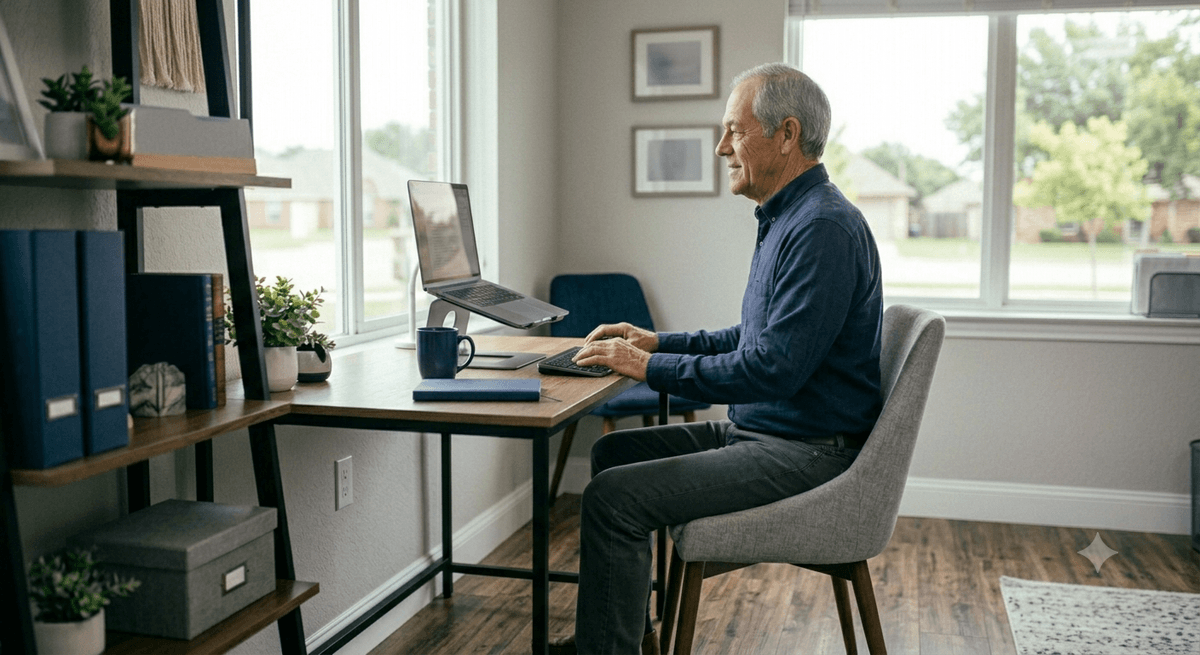
Adjust your chair so your feet rest flat on the floor and your knees are roughly level with your hips. Position your screen at eye level so you are not craning forward. Keep what you use most within easy reach so you are not twisting repeatedly.
Strengthen Your Core and Glutes
The stronger the muscles that support your spine, the less your lower back has to compensate. Simple, consistent strengthening makes a real difference over time.
Stretch Your Hips
Because tight hip flexors are such a common culprit, gentle hip-opening stretches can relieve a surprising amount of lower back tension.
See a Chiropractor
If the pain keeps returning no matter what you try, a chiropractor can identify what is actually going on, restore movement to stiff joints, ease the muscle tension, and give you a plan tailored to your body and your daily routine. If that sounds like where you are right now, call us at 817-473-1849 or request an appointment online and let’s get to the bottom of it. You can also learn more about how chiropractic care works in our education center.
When to Get It Checked Out
Occasional stiffness after a long day is normal. But if your lower back pain is persistent, keeps coming back, radiates down your leg, or interferes with your sleep and daily life, it is worth having it evaluated rather than just pushing through. Our guide on when to see a chiropractor for back pain walks through the warning signs in more detail.
Frequently Asked Questions
Why does my lower back hurt after sitting but feel better when I stand?
Sitting, especially slouched, puts more pressure on your lower spine and discs than standing does. It also tightens your hip flexors and switches off supporting muscles. Standing relieves that pressure and re-engages those muscles, which is why you often feel better once you get up.
Can sitting too much cause permanent back damage?
Occasional sitting-related pain usually resolves with movement and better habits. But years of prolonged sitting with poor posture can contribute to longer-term issues. The earlier you address it, the easier it is to prevent it from becoming chronic.
What is the best sitting position for lower back pain?
Aim to keep your feet flat on the floor, knees roughly level with your hips, back supported, and screen at eye level so you are not leaning forward. More important than any single position is changing positions and moving regularly.
How can a chiropractor help with back pain from sitting?
A chiropractor can restore movement to stiff spinal joints, relieve the muscle tension caused by prolonged sitting, and recommend stretches, strengthening, and workspace changes to address the root cause rather than just the symptoms.
Get Relief From Desk-Related Back Pain in Mansfield
You should not have to dread the end of every workday. At Polson Family Chiropractic, we help Mansfield-area desk workers, drivers, and anyone stuck sitting for long hours get to the root of their back pain and stay ahead of it. We have served families across Mansfield, Arlington, Grand Prairie, Kennedale, and the surrounding DFW area since 1984.
Call us at 817-473-1849 or request an appointment online. We are located at 1750 Broad Park Circle S, Suite #302, Mansfield, TX 76063, and we are glad to answer any questions before you come in.